
We’re drowning in news. Every notification brings another crisis, another scandal, another thing we’re supposed to have an opinion about. And honestly? Sometimes the only way to process it all is to laugh at the absurdity.
That’s where satirical takes on news come in. They’re not just jokes. They’re a survival mechanism for navigating information overload while maintaining your sanity.

Why Satire Matters More Than Ever
Think about the last time a news story made you feel completely overwhelmed. Maybe it was some political announcement that seemed too ridiculous to be real. Or a tech company claiming their new product would revolutionize everything (again). The facts were there, but they didn’t quite make sense.
Good satire cuts through that fog. It takes the kernel of truth buried in the headline and amplifies it until you can’t ignore the contradiction anymore. When The Onion writes a headline that sounds almost plausible, that’s the point. Reality has gotten so strange that satire barely needs to exaggerate.
Satire also gives us permission to be critical without being cynical. You can point out the emperor has no clothes while still laughing about it.
What Makes a Satirical Take ‘Effective’
Not all satirical takes on news hit the mark. Some fall flat. Others get mistaken for real news (which creates its own problems). The best ones share three qualities:
- Clear target: You immediately understand what’s being satirized
- Truth illumination: The humor reveals something genuine about the situation
- Shareability: People want to pass it along because it captures what they’re thinking
If your satirical take requires a three-paragraph explanation, it probably isn’t working. The best satire is instantly recognizable and makes people think “yes, exactly” before they’ve even finished reading.
The Anatomy of Great Satirical Takes on News
Before we dive into specific examples, let’s break down what actually makes satire work. It’s not just about being funny or clever. There’s a structure to it.
The Three Pillars of Effective Satire

Exaggeration takes something real and pushes it just far enough that the absurdity becomes obvious. If a company announces they’re “disrupting” an industry, satire might have them disrupting breakfast or disrupting gravity. The technique works because it follows the logic to its ridiculous conclusion.
Irony highlights the gap between what’s said and what’s actually happening. When politicians claim to care about working families while voting against family leave, that’s ironic. Satire just makes that irony impossible to ignore.
Reversal flips the expected narrative. Instead of a CEO explaining why layoffs were necessary, satire might have them explaining why they deserve a bonus for making those tough decisions. Same facts, different framing, suddenly the absurdity is visible.
Finding the Absurdity in Real Headlines
The best satirical takes don’t come from nowhere. They start with real headlines that already contain contradictions. Your job is to spot them.
Look for headlines where the stated reason doesn’t match the obvious motivation. Or where the solution being proposed seems wildly disconnected from the problem. Or where someone’s taking credit for something they clearly didn’t do.
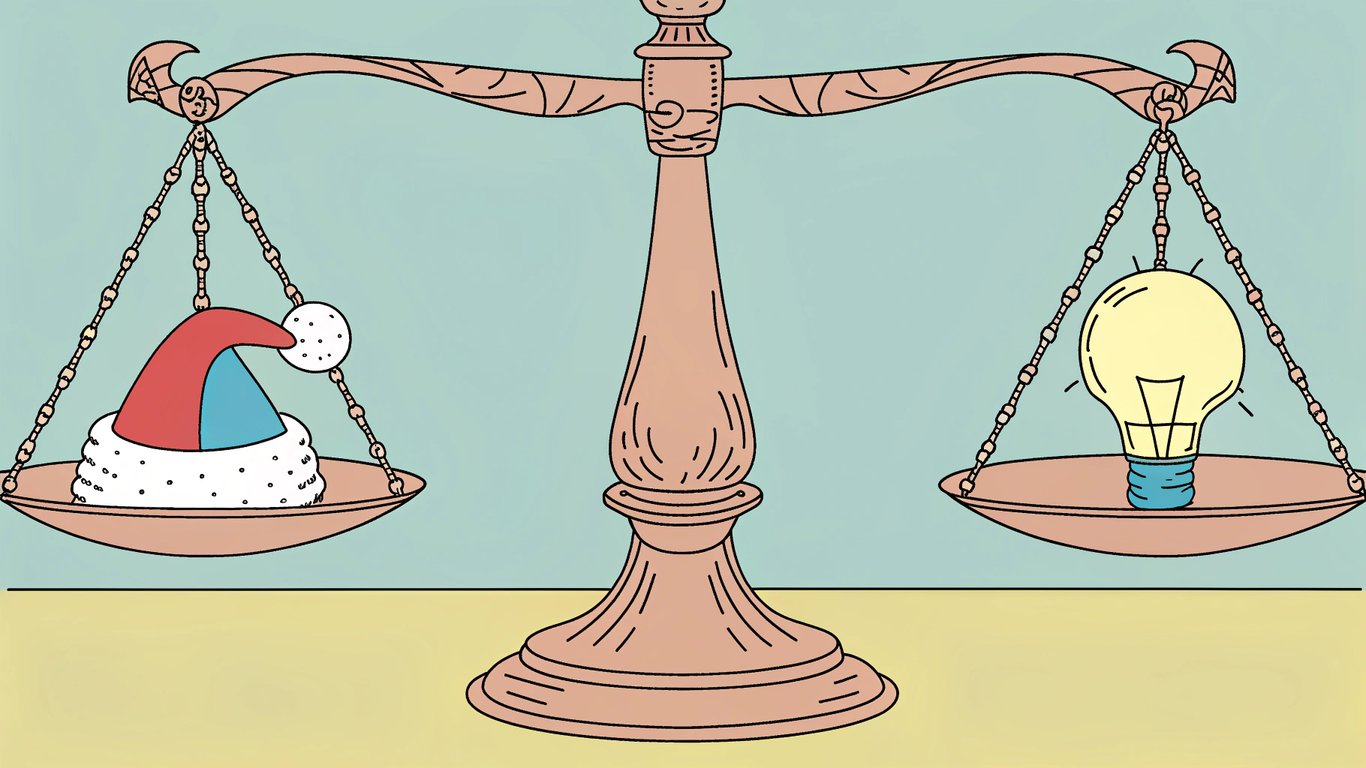
These contradictions are everywhere once you start looking. A company announces record profits and layoffs in the same quarter. A politician campaigns on reducing government spending while requesting funding for their district. An influencer posts about authenticity from their sponsored vacation.
Balancing Humor with Insight
Here’s the tricky part. If you’re just funny, you’ve written a joke. If you’re just insightful, you’ve written commentary. Satire needs both.
The humor makes people want to engage. The insight makes them think about it afterward. You want someone to laugh, then pause, then realize why it’s actually not that funny. That’s when satire works.
12 Brilliant Examples of Satirical Takes on 2025 Headlines
Let’s look at specific examples that demonstrate these principles in action. I’ve organized them by category, but the techniques apply across all types of news.
Examples 1-3: Political Satire That Hits the Mark
Example 1: “Politician Promises to Fight Corruption by Accepting Larger Donations”
This works because it uses reversal. Instead of hiding the contradiction between fighting corruption and taking money, it makes the contradiction the entire premise. The satirical take follows the politician’s logic to its absurd endpoint. You can’t be corrupted by small donations if you only accept large ones, right?
Example 2: “Congress Achieves Rare Bipartisan Agreement That They All Deserve Raises”
The humor here comes from exaggeration of a real pattern. Congress often struggles to pass legislation but somehow finds consensus on their own benefits. By framing it as a rare moment of unity, the satire highlights what they actually agree on versus what they claim to prioritize.
Example 3: “Local Man Who ‘Does His Own Research’ Somehow Reaches Same Conclusion as Cable News Network”
This uses irony to point out how “independent research” often just means confirming existing biases. The satirical take doesn’t attack the person directly. It just observes the coincidence and lets readers draw their own conclusions.
Examples 4-6: Tech and AI News Through a Satirical Lens
Example 4: “New AI Tool Promises to Disrupt Industry by Doing Exactly What Previous Tool Did”
Tech companies love the word “disrupt.” This satirical take uses exaggeration to highlight how many “revolutionary” products are just incremental updates with better marketing. The technique works because anyone following tech news has seen this pattern repeatedly.
Example 5: “Silicon Valley Founder Discovers Buses, Calls Them ‘Transportation-as-a-Service'”
This reversal satirizes the tendency to rebrand existing concepts with tech jargon. Public transit becomes a startup idea. The humor comes from treating something mundane as innovative, which mirrors how some tech announcements actually work.
Example 6: “Company Announces Layoffs to Fund AI That Will Eventually Replace Remaining Employees”
Dark humor, but effective. This takes the logical extreme of current AI investment trends. Companies are cutting staff to invest in automation, which will eventually automate more jobs. The satire just makes the endpoint explicit.
Examples 7-9: Social Media and Cultural Trends Satirized
Example 7: “Influencer Takes Break from Social Media to Focus on Posting About Taking Break from Social Media”
This uses irony to highlight how even “authentic” moments become content. The contradiction between taking a break and posting about the break is the entire joke. It works because we’ve all seen this exact pattern.
Example 8: “Man Deletes Facebook to Protect Privacy, Tells Everyone on Instagram”
Similar technique, different target. The satire points out how privacy concerns are often selective. Moving from one platform to another owned by the same company isn’t actually solving the problem, but people treat it like a meaningful change.
Example 9: “Viral Video of Person Doing Normal Thing Inspires Millions to Continue Doing Normal Thing”
This satirizes how mundane activities become “inspiring” content. The exaggeration is minimal because viral content really does often feature completely ordinary behavior presented as revolutionary. The satire just states it plainly.
Examples 10-12: Economic and Corporate News Parodies
Example 10: “CEO Credits Success to Hard Work of Employees He Just Laid Off”
Reversal again. The timing contradiction is the joke. Praising employees while eliminating their jobs highlights the disconnect between corporate messaging and corporate actions.
Example 11: “Company Announces ‘Return to Office’ Policy to Justify Real Estate Investments”
This works by stating the quiet part loud. Many return-to-office mandates are about real estate and management preferences, not productivity. The satire just makes the actual motivation the official reason.
Example 12: “Billionaire Explains How Anyone Can Succeed with Hard Work and Inherited Wealth”
Classic irony. The contradiction between “anyone can do it” and “inherited wealth” is obvious, but the satire makes it impossible to ignore. It follows the logic of bootstrap narratives while including the detail those narratives usually omit.
Common Patterns in Successful Satirical Takes
Looking at these examples, you’ll notice certain approaches keep appearing. These aren’t rigid rules, but they’re reliable frameworks for creating effective satirical takes on news.
The ‘Logical Extreme’ Technique
Take the premise of a news story and follow it to its inevitable conclusion. If companies are replacing workers with AI, eventually they’ll replace everyone. If politicians keep accepting donations, eventually they’ll just be explicit about it. The satire doesn’t invent a new direction. It just keeps going in the same direction until the absurdity is undeniable.
The ‘Innocent Observer’ Approach
Describe what’s happening as if you’re seeing it for the first time, without the context that makes it seem normal. This works particularly well for things we’ve become desensitized to. When you describe targeted advertising as “companies following you around the internet to show you things you looked at once,” it sounds creepy because it is creepy. We’ve just gotten used to it.
The ‘Alternate Reality’ Method
Create a parallel scenario that mirrors the real situation but in a different context. If a CEO gets a bonus after layoffs, imagine a coach getting a raise after cutting half the team. The logic is identical, but removing it from the corporate context makes the absurdity clearer.
Your Reusable Satire Template: A Step-by-Step Framework
Now let’s turn this into something you can actually use. This template works for any news headline you want to satirize.
Step 1: Headline Selection and Analysis
Start by asking these questions about your chosen headline:
- What’s the stated reason for this event?
- What’s the likely actual reason?
- Who benefits from this?
- What contradiction exists between the messaging and the reality?
- If this logic continued, where would it lead?
Write down your answers. The gap between stated and actual reasons is usually where your satire lives.
Step 2: Choosing Your Satirical Angle
Based on your analysis, pick your approach:
- If there’s a clear contradiction: Use reversal (state the quiet part loud)
- If the logic is flawed: Use logical extreme (follow it to absurd conclusion)
- If something normalized is actually weird: Use innocent observer (describe it plainly)
- If the situation mirrors something else: Use alternate reality (create parallel scenario)
Step 3: Crafting Your Satirical Take
Here’s your fill-in-the-blank template:
For reversal: “[Subject] announces [stated goal] by [doing opposite of stated goal]”
Example: “Company announces commitment to sustainability by increasing plastic packaging”
For logical extreme: “[Subject] takes [current action] to logical conclusion, [absurd result]”
Example: “Streaming service raises prices again, will soon cost more than cable”
For innocent observer: “[Plain description of normalized behavior that sounds weird when stated plainly]”
Example: “Adults spend hours watching strangers play video games instead of playing themselves”
For alternate reality: “Imagine if [different context] worked like [current situation]”
Example: “Imagine if restaurants charged you monthly whether you ate there or not”
Step 4: Refining for Maximum Impact
Before you share, check these boxes:
- Is it immediately clear what you’re satirizing?
- Does it reveal something true about the situation?
- Would someone unfamiliar with the story still find it funny?
- Is it obviously satire (not mistakable for real news)?
- Does it punch up (target power) rather than down (target vulnerable groups)?
Platform-Specific Tips for Sharing Satirical Takes on News
Different platforms need different approaches. What works on Reddit might fall flat on Twitter.
Twitter/X: Punchy One-Liners and Thread Satire
Keep it under 280 characters if possible. The constraint forces clarity. If you need more space, use a thread where each tweet can stand alone but builds to a larger point. Start with your strongest line. People won’t click “show more” unless you hook them immediately.
Reddit and Forum-Based Satire
Reddit rewards longer-form satire that matches the community’s specific interests. A satirical take that works in r/technology might need adjustment for r/politics. Read the room. Understand what that particular community finds frustrating about current events, then satirize that specific frustration.
TikTok and Video Satire Formats
Video satire needs visual elements. You can’t just read text on screen. Consider using the “person reacting to news” format, or the “explaining it to someone from the past” approach. The key is making the satire work even if someone watches without sound.
Avoiding Common Pitfalls in News Satire
Even good satirists mess up sometimes. Here’s how to avoid the most common mistakes.
The Line Between Satire and Misinformation
Your satire should be obviously satirical. If people might mistake it for real news, you’ve failed. This doesn’t mean dumbing it down. It means making sure the absurdity is clear. When in doubt, add a label. “Satire” or “Parody” in your bio or post helps prevent your joke from becoming someone else’s fake news.
Punching Up vs. Punching Down
Satire works best when it targets power, not vulnerability. Satirizing a billionaire’s tone-deaf tweet is fair game. Satirizing someone struggling with poverty isn’t. The rule isn’t absolute, but it’s a good guideline. Ask yourself: am I making fun of someone’s choices and power, or their circumstances and identity?
When Satire Falls Flat: Learning from Failures
Sometimes your satirical take just doesn’t land. Maybe the timing was off. Maybe the target was too obscure. Maybe you were too subtle or not subtle enough. That’s fine. The best satirists have plenty of misses. The key is recognizing when something isn’t working and understanding why.
If your satire gets mistaken for a genuine opinion, it probably wasn’t clear enough. If people don’t get the reference, you might need more context. If it just isn’t funny, maybe the premise wasn’t as strong as you thought.
Your Turn to Create Satirical Takes
You’ve got the framework. You’ve seen the examples. Now it’s time to practice.
Practice Exercises to Sharpen Your Skills
Try creating satirical takes on these types of headlines:
- A company announcing a new subscription service for something that used to be free
- A politician claiming to represent working people while opposing worker protections
- A tech company promising their product will solve a problem their previous product created
Use the template from earlier. Try different approaches for the same headline. See which one feels strongest.
Resources for Aspiring Satirists
If you want to develop your satirical voice further, study the masters. The Onion remains the gold standard for headline satire. McSweeney’s Internet Tendency publishes longer-form satirical pieces. On social media, accounts that consistently nail satirical takes on news tend to have a clear point of view and deep knowledge of their subject matter.
The best training is just doing it. Pick a headline every day and try to find the satirical angle. Most won’t be worth sharing, but the practice helps you recognize opportunities when they appear. Over time, you’ll develop an instinct for spotting the contradictions and absurdities that make great satire possible.
Start small. A single tweet or Reddit comment. See what resonates. Refine your approach based on what works. The template gives you structure, but your voice and perspective make it yours.
Support Independent Satire
Your contribution helps keep True Free World confusing the powerful, enlightening the masses, and occasionally breaking international law by accident.


