
Conspiracy theories follow predictable patterns. Once you’ve seen a few, you start recognizing the same narrative structures repeating themselves with different details swapped in. It’s like Mad Libs for the paranoid.
Understanding these templates isn’t just an academic exercise. It helps you spot misinformation faster, create effective satire, and maybe even understand why your uncle won’t stop talking about fluoride at Thanksgiving dinner.
Why Understanding Conspiracy Templates Matters
Recent research on false information shows that young people particularly struggle with identifying misleading narratives online. Learning to recognize conspiracy theory structures acts like a mental immune system. When you’ve seen the template, you’re less likely to fall for the specific instance.
These patterns also reveal something about human psychology. We’re wired to find patterns, seek agency in random events, and prefer simple explanations over complex ones. Conspiracy theories exploit these tendencies brilliantly.
The Fine Line Between Parody and Amplification
Here’s the tricky part: bad satire can accidentally spread the very ideas it’s trying to mock. This phenomenon, called Poe’s Law, states that without clear indicators of intent, it’s impossible to distinguish extreme views from parody of those views.
Effective parody needs to be obviously absurd while still highlighting the logical flaws in conspiracy thinking. It’s a balance. Too subtle and people take you seriously. Too obvious and you’re just preaching to the choir.
The Classic Conspiracy Theory Templates
Most popular conspiracy theories fit into a handful of basic templates. Think of these as the building blocks that get remixed endlessly across different contexts and time periods.
The ‘Secret Society’ Template

This template features shadowy organizations pulling strings behind the scenes. The Illuminati, New World Order, Freemasons. The appeal is straightforward: if powerful people are secretly coordinating, then world events aren’t random chaos but part of a plan.
The psychological comfort here is weird but real. A malevolent plan is somehow less scary than acknowledging that nobody’s really in control and things just happen.
Parody approach: Create a secret society with absurdly mundane goals. The International Association of People Who Prefer Their Toast Slightly Burnt. They meet in dimly lit basements to discuss optimal toaster settings and leave cryptic breadcrumb trails (literally).
The ‘Cover-Up’ Template
Governments or corporations are hiding the truth about something significant. Area 51, suppressed cancer cures, moon landing deniers. This template taps into our love of forbidden knowledge and distrust of authority.
The logic typically goes: if they’re not hiding something, why won’t they show us everything? This ignores legitimate reasons for secrecy (national security, privacy, proprietary information) and assumes absence of evidence equals evidence of conspiracy.
Parody approach: The government is covering up something completely obvious or universally known. They’re hiding the fact that birds can fly. Mountains are tall. Water is wet. Play it completely straight while describing elaborate cover-up mechanisms for self-evident truths.
The ‘False Flag’ Template
This template claims events were staged or orchestrated by the very people who appear to be victims, usually for political gain. It’s particularly harmful because it often targets real tragedies and the people affected by them.
Parody approach: Don’t parody real tragedies. Ever. Instead, apply the template to completely fictional or absurdly minor events. Your cat knocked over a plant as a false flag operation to get more treats. The logic is identical but the stakes are nonexistent.
The ‘They’re Among Us’ Template
Hidden infiltrators walk among regular people. Reptilians, aliens in human suits, deep state agents. This template feeds on paranoia and the unsettling idea that you can’t trust what you see.
Research on extraterrestrial belief narratives shows these stories persist as cultural constructs that fulfill psychological needs around pattern recognition and community belonging, even without empirical evidence.
Parody approach: Make the infiltrators obviously impossible or ridiculous. Time-traveling historians from the future are living among us, desperately trying not to spoil historical events. Sentient houseplants have infiltrated our homes and are judging our interior design choices.
The ‘Everything Is Connected’ Template
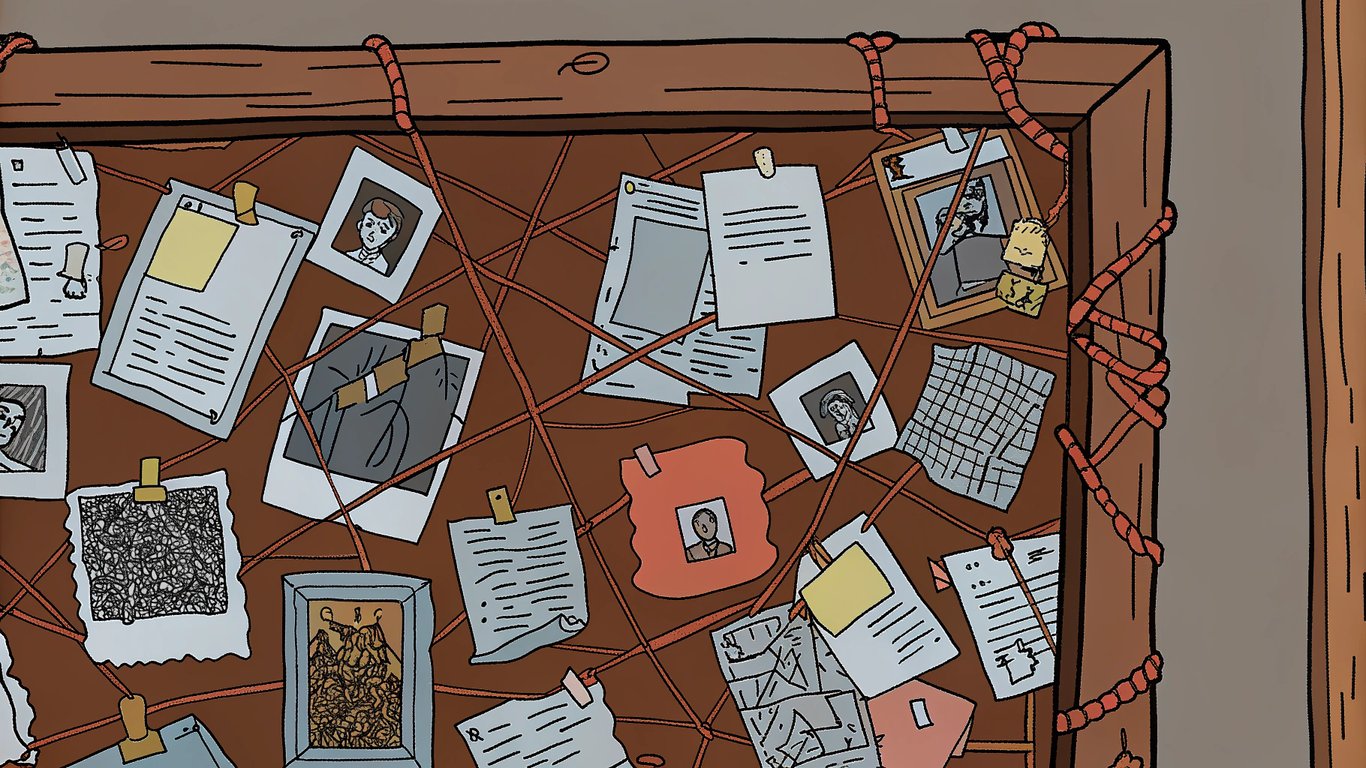
This template links unrelated events through elaborate chains of connection. It’s the red string on the corkboard aesthetic. The appeal lies in making sense of complexity by finding hidden patterns.
Our brains are pattern-recognition machines, which served us well evolutionarily but sometimes fires false positives. We see faces in clouds and conspiracies in coincidences.
Parody approach: Connect things through hilariously tortured logic. The price of avocados is controlled by the phases of the moon, which explains why your neighbor’s dog barks at 3 AM, which is clearly related to the decline of cursive handwriting in schools. Make the connections increasingly absurd while maintaining the serious tone conspiracy theorists use.
The ‘Big Pharma/Big Tech’ Template
Corporations are suppressing cures, controlling minds, or manipulating society for profit. This template has a kernel of truth (corporations do prioritize profit) but extrapolates it into elaborate schemes.
The challenge here is distinguishing legitimate corporate criticism from conspiracy thinking. Yes, pharmaceutical companies have done unethical things. No, they’re probably not suppressing a simple cure for cancer that would make them billions.
Parody approach: Big Sock is suppressing technology that makes socks never disappear in the dryer. Big Furniture doesn’t want you to know that assembling IKEA products is actually easy; they just write confusing instructions to sell more Allen wrenches.
How Popular Conspiracy Theories Mix Templates

Real conspiracy theories rarely stick to one template. They’re more like conspiracy theory smoothies, blending multiple templates into increasingly complex narratives.
Take any major conspiracy theory and you’ll find elements of secret societies (who’s behind it), cover-ups (what they’re hiding), infiltrators (who’s helping them), and elaborate connections (how it all fits together). This layering makes them more resilient to debunking because you can’t just address one element.
The Evolution in the Digital Age
Social media changed everything. Conspiracy theories used to spread through photocopied newsletters and late-night radio. Now they mutate in real-time across platforms, picking up new elements and adapting to current events.
Meme culture accelerated this evolution. A conspiracy theory can be packaged as a joke, spread widely, and some percentage of people will take it seriously. The line between ironic belief and actual belief gets blurry fast.
The Responsible Parody Toolkit
Creating effective conspiracy parody requires specific techniques and ethical guardrails. Here’s what actually works.
The Golden Rules
- Make absurdity obvious: Your parody should be clearly ridiculous to anyone paying attention
- Avoid real tragedies: Never parody conspiracies about actual harmful events
- Punch up, not down: Mock powerful institutions or abstract concepts, not vulnerable groups
- Include satire signals: Use exaggeration, impossible logistics, or self-aware narration
- Consider your audience: Will vulnerable people mistake this for real information?
Techniques for Obvious Satire
Exaggeration: Take the conspiracy logic to its extreme conclusion. If fluoride in water is mind control, then clearly the government is also controlling us through oxygen molecules and the letter Q.
Impossible logistics: Describe the conspiracy in detail until the practical impossibility becomes clear. To fake the moon landing, you’d need to silence thousands of people across multiple countries for decades, which is somehow harder than just going to the moon.
Self-aware narration: Occasionally break the fourth wall. ‘Now, you might be thinking this sounds ridiculous, and you’d be right, but hear me out…’
What NOT to Parody
Some conspiracy theories are off-limits for parody because the potential harm outweighs any satirical value. This includes theories that target vulnerable groups, recent tragedies where people are still grieving, or medical misinformation during health crises.
When in doubt, ask yourself: could this parody cause real harm to real people? If yes, find a different target.
Understanding Your Audience
Different platforms and demographics engage with conspiracy parody differently. What works on Twitter might fall flat on Facebook. What resonates with Gen Z might confuse Boomers.
Platform Considerations
Twitter rewards quick, punchy satire with obvious signals. The character limit actually helps by forcing brevity that makes the joke clearer. TikTok allows for more elaborate setups with visual cues and tone of voice. Long-form articles can build more complex parodies but risk losing the casual reader who might miss the satire.
Facebook is probably the riskiest platform for conspiracy parody. The demographic skews older, satire signals are easily missed, and the algorithm loves engagement regardless of whether people get the joke.
The Psychology Behind Why Parody Works
Good conspiracy parody works because it satisfies the same psychological needs as actual conspiracy theories, but in a harmless way.
Why We’re Drawn to Conspiracy Narratives
Conspiracy theories fulfill real psychological needs. They provide simple explanations for complex events, create a sense of special knowledge, and offer community with like-minded believers. They make people feel like they’ve figured something out that others missed.
Parody can address these same needs positively. It creates in-group knowledge (getting the joke), provides simple explanations (for why conspiracy thinking is flawed), and builds community around skepticism rather than belief.
The Inoculation Effect
Research suggests that exposure to weakened versions of misinformation can build resistance to the real thing. It’s like a vaccine for your brain. When you’ve seen absurd versions of conspiracy templates, you’re better equipped to recognize the serious versions.
This doesn’t mean parody alone solves the misinformation problem. But it’s one tool in a larger media literacy toolkit.
When Parody Backfires
Sometimes parody reinforces the very ideas it’s trying to mock. This happens when the satire is too subtle, when it’s shared out of context, or when it accidentally provides new talking points for actual conspiracy theorists.
The solution isn’t to stop creating parody but to be more intentional about how you craft and present it. Clear signals matter. Context matters. Knowing your audience matters.
Your Parody Checklist
Before you post your conspiracy theory parody, run through this checklist:
- Is the absurdity obvious to someone unfamiliar with the topic?
- Does it avoid real tragedies or vulnerable groups?
- Are there clear satire signals throughout?
- Could this be taken out of context and spread as real?
- Does it mock the conspiracy thinking rather than the believers?
- Would you be comfortable if someone you respect saw this?
- Does it add educational value beyond just being funny?
If you can’t confidently answer yes to most of these, revise or reconsider posting.
Resources for Further Learning
For deeper dives into media literacy and conspiracy theory research, check out Snopes for fact-checking, The Poynter Institute for journalism ethics, and academic journals on misinformation psychology.
The key is approaching conspiracy theories with curiosity rather than contempt. Understanding why people believe them makes you better at both recognizing them and creating effective parody that might actually change minds.
Support Independent Satire
Your contribution helps keep True Free World confusing the powerful, enlightening the masses, and occasionally breaking international law by accident.


